

The Diamond World: The Ultimate Guide to Diamond Jewellery
Diamonds have captivated humanity for centuries. Formed deep within the Earth’s mantle under extreme pressure and heat over billions of years, these extraordinary gemstones represent resilience, purity, and enduring strength. Across generations, diamonds have evolved from rare symbols of royalty into the ultimate centerpiece of fine jewellery—celebrating milestones, love, and personal expression.
Welcome to The Diamond World, a comprehensive journey through the artistry, science, history, and style behind diamond jewellery.
1. The Heritage and Allure of Diamonds
The word “diamond” comes from the ancient Greek adamas, meaning “unbreakable” or “invincible.” This title is fitting: on the Mohs scale of mineral hardness, a diamond sits at a perfect 10, making it the hardest natural substance on Earth.
From Sacred Stones to Royal Treasures
The earliest recorded diamond trading occurred in India, where riverbed diamonds (alluvial diamonds) were treasured as sacred symbols of protection against evil. During the Renaissance and the Age of Enlightenment, diamond cutting advanced rapidly in European craft capitals like Antwerp, Amsterdam, and London. Diamonds transformed from raw, dull octahedrons into brilliant, faceted gems that captured and reflected light in ways no other stone could achieve.
Why Diamonds Hold Unmatched Fascination
Beyond their physical durability, diamonds interact with light like no other gem. A expertly cut diamond does not merely reflect light; it bends, breaks, and refracts it into a spectrum of vivid colors—a phenomenon known as fire and scintillation. This optical brilliance makes diamond jewellery the undisputed focal point of fine adornment.
2. The Universal Standard: Understanding the 4 Cs
To navigate the diamond world with confidence, one must understand the global grading language established by the Gemological Institute of America (GIA): The 4 Cs—Cut, Clarity, Color, and Carat Weight.
I. Cut: The Catalyst of Fire and Light
While many assume cut refers to a diamond’s shape, it actually measures how precisely the facets are angled and proportioned. A diamond’s ability to sparkle depends almost entirely on its cut.
- Shallow Cut: Light leaks out of the bottom, making the diamond appear dull and lifeless.
- Deep Cut: Light escapes through the sides, causing the center of the stone to look dark.
- Ideal / Excellent Cut: Light enters through the top table, reflects internally off the pavilion facets, and bounces back directly to the viewer’s eye in an explosion of brightness.
II. Color: The Search for Purity
The GIA color grading scale for white diamonds runs from D (completely colorless) to Z (noticeable light yellow or brown hue).
- D–F (Colorless): Extremely rare and highly prized, set best in platinum or white gold to highlight purity.
- G–J (Near Colorless): Offers exceptional value; when set in yellow or rose gold, any subtle warmth disappears completely.
- Fancy Colored Diamonds: Rare structural variations or trace elements create natural diamonds in vivid shades of pink, yellow, blue, and green.
III. Clarity: Nature’s Unique Fingerprint
Because natural diamonds form beneath intense subterranean pressure, almost all stones possess tiny internal characteristics (inclusions) or external marks (blemishes).
- FL / IF (Flawless / Internally Flawless): No internal inclusions visible under 10x magnification.
- VVS1–VVS2 (Very Very Slightly Included): Inclusions are extremely difficult for even expert gemologists to spot under magnification.
- VS1–VS2 (Very Slightly Included): Inclusions are minor and typically invisible to the naked eye (“eye-clean”).
- SI1–SI2 (Slightly Included): Inclusions are noticeable under magnification and may occasionally be seen by the naked eye.
IV. Carat Weight: Measure of Presence
Carat refers strictly to a diamond’s physical weight, not its visual surface size (1 carat = 200 milligrams). Because larger gem-quality diamonds are exponentially rarer in nature, a single 2.0-carat diamond costs significantly more than two separate 1.0-carat diamonds of equal quality.
3. Essential Diamond Cuts and Shapes
A diamond’s shape dictates its overall geometry and personality. From classic symmetry to modern geometric angles, each shape offers a distinct light reflection profile.
1. The Round Brilliant Cut
The iconic standard of the diamond industry. Engineered with 57 or 58 facets mathematically calculated to maximize light reflection, the round brilliant accounts for over 70% of all diamonds sold worldwide.
2. The Oval Cut
Combining the brilliance of the round cut with an elongated silhouette, the oval cut creates an optical illusion that makes fingers appear longer and sleeker while maximizing visual surface area.
3. The Emerald Cut
A classic “step-cut” design characterized by rectangular facets and open glass-like transparency. Rather than hyper-sparkle, the emerald cut displays a sophisticated “mirror effect” that emphasizes high stone clarity.
4. The Princess Cut
A sharp, square cut with brilliant facet patterns. The princess cut offers intense sparkle within a contemporary geometric frame, making it a popular choice for modern engagement rings.
5. Marquise, Pear, and Cushion Cuts
- Pear (Teardrop): Merges round brilliance with a single tapered point for a dramatic drop effect.
- Marquise: An elongated shape with pointed ends inspired by the smile of the Marchioness of Pompadour.
- Cushion: A soft square or rectangle with rounded corners, blending vintage warmth with brilliant facet patterns.
4. Iconic Categories of Diamond Jewellery
Diamond jewellery encompasses a wide range of styles, from essential daily staples to statement ceremonial pieces.
I. The Engagement Ring & Wedding Band
The ultimate symbol of commitment. From delicate single-stone solitaires and glowing halo settings to vintage-inspired three-stone rings (representing past, present, and future), the diamond ring remains the core pillar of the diamond industry.
II. Diamond Earrings: Solitaires, Huggies & Chandelers
- Stud Earrings: A timeless accessory suitable for any setting.
- Diamond Hoops & Huggies: Row-set pave or channel diamonds wrapping the earlobe in continuous light.
- Drop & Chandelier Earrings: Dramatic, moving architectural clusters worn for red-carpet events and grand bridal celebrations.
III. The Tennis Bracelet
Named after tennis icon Chris Evert—who famously paused a match during the 1978 US Open to recover her fallen diamond line bracelet—the tennis bracelet features a continuous, flexible row of individually set diamonds. It remains a hallmark of modern luxury.
IV. Statement Necklaces & Solitaire Pendants
- Pendant Necklaces: A single diamond suspended from a fine gold or platinum chain resting gracefully at the collarbone.
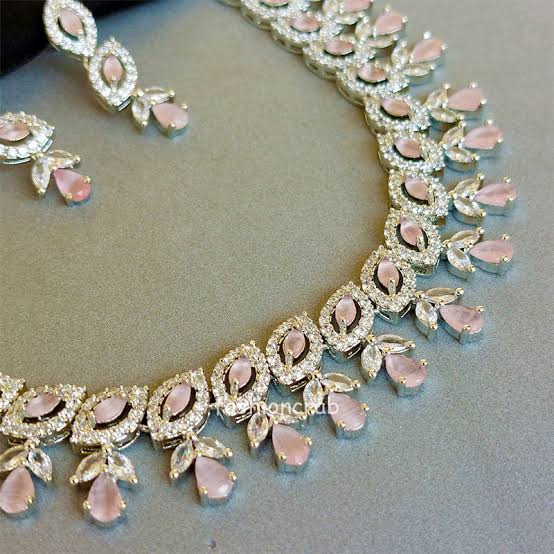
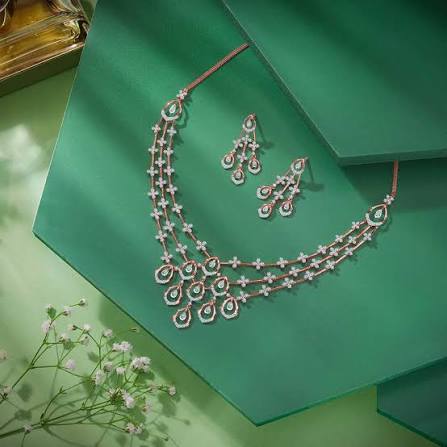
- Riviere & Pave Collar Necklaces: Rows of perfectly matched diamonds wrapped seamlessly around the neck to form a luminous line of light.
5. Setting the Stone: Artistry Meets Security
How a diamond is anchored into precious metal profoundly affects its appearance, security, and maintenance needs.
| Setting Type | Visual Effect | Protection Level | Best Suited For |
|---|---|---|---|
| Prong (Claw) | Elevates the stone; permits light from all angles. | Moderate | Solitaire rings, pendant necklaces |
| Bezel | Encases the stone’s rim in a smooth metal collar. | Maximum | Active lifestyles, modern minimalist pieces |
| Pave | Tiny diamonds set closely together across a surface. | High | Ring bands, halos, intricate detailing |
| Channel | Diamonds set flush between two parallel metal walls. | High | Wedding bands, tennis bracelets |
| Halo | Encircles a central diamond with smaller accent stones. | High | Adding visual size and brilliance to a center stone |
6. The Future of the Diamond World: Ethics, Natural vs. Lab-Grown
The global diamond landscape is undergoing a significant transformation, driven by technological innovation and evolving consumer values.
Conflict-Free Certification & Ethical Sourcing
Through initiatives like the Kimberley Process, the international diamond industry enforces strict regulations to eliminate conflict diamonds from global supply chains. Modern diamond buyers prioritize origin transparency, favoring ethically mined natural diamonds from regions like Botswana, Canada, and Australia that invest directly back into local communities.
Natural vs. Lab-Grown Diamonds
One of the most important developments in modern gemology is the rise of Lab-Grown Diamonds.
- Chemical & Physical Identity: Lab-grown diamonds are structurally, optically, and chemically identical to mined natural diamonds—composed entirely of pure carbon organized in a crystal lattice.
- How They Are Made: Produced in advanced laboratories using High Pressure High Temperature (HPHT) or Chemical Vapor Deposition (CVD) methods that replicate deep Earth conditions.
- Value & Choice: Natural diamonds remain prized for their finite, billion-year natural rarity and heirloom asset value. Lab-grown diamonds provide an accessible, eco-conscious option that allows buyers to select larger carat weights at lower cost points.
The Timeless Magic of the Diamond
From raw carbon formed in the Earth’s depths to precision-cut jewels set in precious gold and platinum, the diamond world represents a unique fusion of nature, science, and human craftsmanship.
A piece of fine diamond jewellery is never just an accessory. It is a lasting keepsake that catches the light today, preserves memories across decades, and shines brightly for generations to come.