

The Ultimate Guide to Bridal Jewellery Trends for 2026 Brides
Your wedding day is a tapestry of personal style, emotion, and tradition. While bridal couture sets the stage, it is the bridal jewellery that anchors the entire look. The 2026 bridal season marks a pivotal shift: modern brides are moving away from heavy, burdensome sets and stepping into an era of curated luxury, intentional design, and effortless comfort.
Whether you are looking for classic heirloom appeal or sleek, contemporary aesthetics, here are the top bridal jewellery trends defining 2026.
Introduction
Bridal jewellery can be difficult to purchase, but not anymore. Zewia is here for you; There is timeless, unique, and elegant jewellery for the bride. We have timeless gold jewellery with unique designs, with a touch of modernisation, perfect for the modern bride and modern culture.
Bridal jewellery is not just a piece of jewellery or gold, but it’s a center of attraction for the bride. Every bride dreams of wearing something special on their big wedding day. And Zewia is ready to fulfill their big-day dream.
1. HOW TO CHOOSE BRIDAL JEWELLERY?
Bridal jewellery plays a very important role. So choosing the correct bridal jewellery depends on many things
- first thing that matters in the selection of bridal jewellery is the choice of bridal lehenga; your bridal lehenga color and design decide the shape and type of jewellery
- The weight of the jewellery, comfort of the jewellery, and the most important thing is the fitting of the jewellery
- Types of gold and choice of the gold depend on the current situation.
- It also depends on how you do your hairstyle, like whether you are going with an open hair hairstyle or pack bun hairstyle.
i. Neckline Compatibility:
- Deep V-neck or sweetheart neck: the bride must wear layers neckles and drop-pendant necklaces or a choker with a long dangling element.
- High neck or a collar: skip the heavy necklaces and focus on the statement earrings and maang tikka.
- Square or Scoop Neck: looks stunning with the classic choker and broad collar necklaces.
ii. Color & Embroidery Matching:
- Red, Maroon, or Deep Pink: warm yellow gold jewellery and uncut diamonds give a classic, rich look.
- Pastels: platinum jewellery and white gold jewellery, and also white diamond jewellery, give a very elegant and rich look.
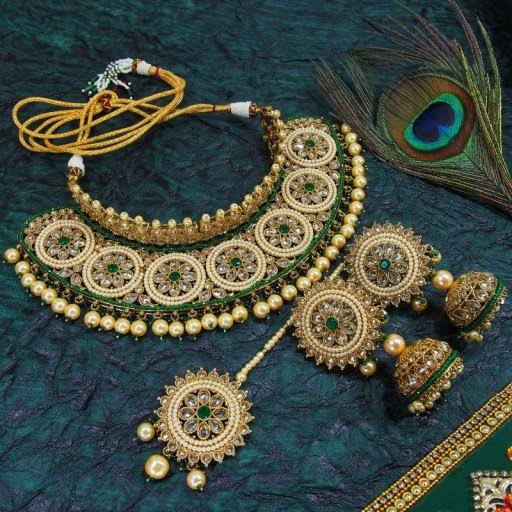
- Green Accents: beaded jewellery goes fabulous with green accents, and stone highlights pair beautifully with almost every bridal color.
2. WHY IS JEWELLERY IMPORTANT FOR A BRIDE?
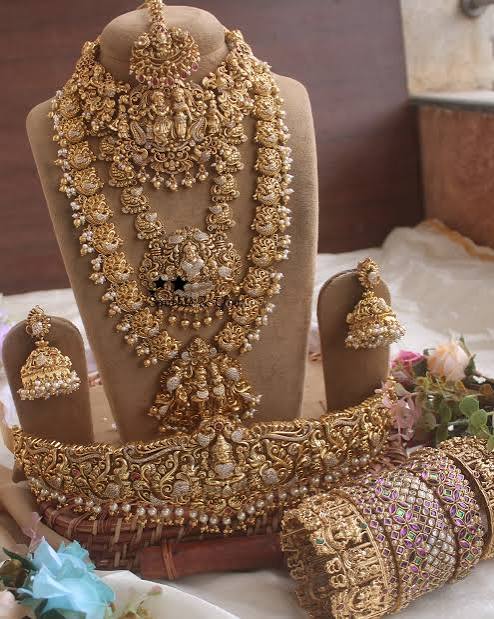
Jewellery is the heart of the bride’s special day. For every bride, their wedding is very special, and it carries timeless tradition, deep emotions, and unforgettable moments. While the outfit, location, and decor create the atmosphere, it is the bridal jewellery that captures the true essence of her transformation. More than simple ornamentation, fine jewellery carries deep cultural symbolism, sentimental value, and an unmatched ability to bring a bride’s personal style to life.
- Symbol of Heritage & Tradition: Bridal jewellery carries deep cultural symbolism. Sacred elements like the Mangalsutra, Chooda, or Nath signify marital bliss, prosperity, and the beginning of a new family legacy.
- Elevates the Bridal Aesthetic: A wedding outfit is incomplete without the right jewels. Carefully chosen pieces, from layered necklaces to delicate earrings, frame the face, complement the neckline, and tie the entire ensemble together.
- Emotional Connection & Family Heirlooms: Many brides wear family heirlooms passed down through generations. Carrying a piece of her mother’s or grandmother’s history creates an irreplaceable sentimental bond on her special day.
- Focus of Distinction: The bride is the centerpiece of the wedding celebration. Statement jewellery enhances her royal presence, adding sparkle that catches the light in every moment and photograph.
- Long-Term Financial Security: Beyond aesthetic beauty, precious gold, platinum, and certified diamond jewellery serve as enduring assets that hold real intrinsic value for the couple’s future together.
3. ALL PIECES OF JEWELLERY HAVE THEIR IMPORTANCE
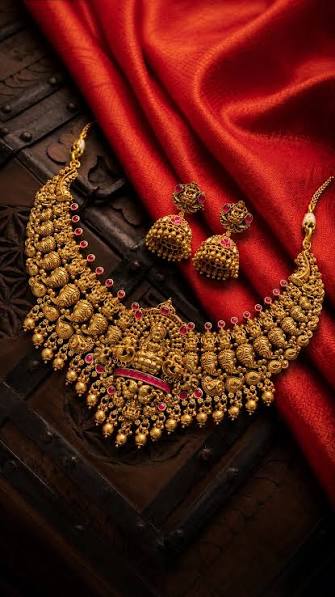
For the bride, every piece of jewellery is very important, and every piece of jewellery has its own tradition and emotions. Jewellery is not only about earrings and necklaces, but it includes a lot of other jewellery. Brides wear jewellery from head to toe, and every piece has its own story…….
1. Hair and Head jewellery
- Maang Tikka: A center pendant that rests on the bride’s forehead along the hairline center parting.
- Matha Patti: An elaborate headpiece featuring a center pendant with decorative chains extending along the hairline.
- Passa / Jhumar: A fan-shaped headpiece worn diagonally on one side of the hair, common in Mughal-inspired bridal looks.
- Hair Pins & Brooches / Solah Shringar Clips: Decorative jewel studs inserted into bridal braids or buns.
2. Face & Neck Accessories
- Nath: A jeweled ring or stud worn on the nostril, often attached to an embellished chain pinned into the hair.
- Choker: A snug, high-neck collar necklace that sits tightly against the base of the throat.
- Necklaces: The centerpiece of a bride’s ensemble, framing her neckline with timeless grace and royal charm.
- Rani haar: A long, statement necklace that extends down to the chest or waist, often layered over a choker.
- Earrings: Classic bell-shaped or crescent-shaped drop earrings, frequently supported by ear-chains (saharas) to distribute weight.
- Mangalsutra: A sacred black-beaded chain or pendant necklace worn after the marriage ceremony.
3. Hand & Arm Jewellery
- Chooda: Traditional set of red and white (or pastel) bangles symbolizing marriage.
- Kada / Kangan: Heavy, thick bangles featuring intricate design work, worn at the front and back of bangle sets.
- Hathphool / Haath Phool: A wrist bracelet connected via jeweled chains to one or more rings worn on the fingers.
- Cocktail Rings: Large, eye-catching statement rings worn on the fingers.
- Vanki / Bajuband: An upper arm bracelet fitted snugly around the bicep.
4. Waist & Feet Adornments
- Kamarbandh / Tagdi / Waist Belt: An embellished belt worn around the waist to accent the bridal lehenga or saree silhouette.
- Payal / Anklets: Jeweled chains or silver/gold bands wrapped around the ankles.
- Bichhiya / Toe Rings: Decorative rings worn on the toes, traditionally symbolizing married status
4. OLD JEWELLERY VS. NEW JEWELLERY
Manufacturing Process: Old jewellery is fully handcrafted using traditional techniques like Kundan and manual engraving, whereas new jewellery uses high-precision CAD modeling, 3D printing, and laser-setting.
Weight & Wearability: Old pieces feature dense, heavy metal bases crafted primarily for grand occasions, while new designs focus on lightweight ergonomics suitable for daily wear.
Design Aesthetic: Old jewellery emphasizes ornate, heritage-rich, and complex cultural motifs, whereas new jewellery leans toward clean lines, geometric shapes, and minimalist styles.
Gemstone Cuts & Settings: Old jewellery uses uncut or vintage-cut stones set in enclosed gold foil, while new jewellery utilizes precision-cut certified diamonds in open settings that maximize light reflection.
Versatility: Old jewellery is generally rigid and fixed in form, whereas new pieces often feature modular or convertible designs (e.g., detachable pendants or convertible stud earrings).
Primary Purpose: Old jewellery was primarily bought as a heavy family heirloom or store of wealth, while new jewellery expresses personal style and contemporary fashion.
Frequently asked questions….
1. How to choose bridal jewellery?
Brides who are unsure about their jewellery should finalize their pieces based on their outfit. The most important step is matching the jewellery style with the outfit while ensuring the necklace complements the neckline.